-
এখনই কল করুন +86 13426858645
-
কোনো প্রশ্ন আছে? [email protected]
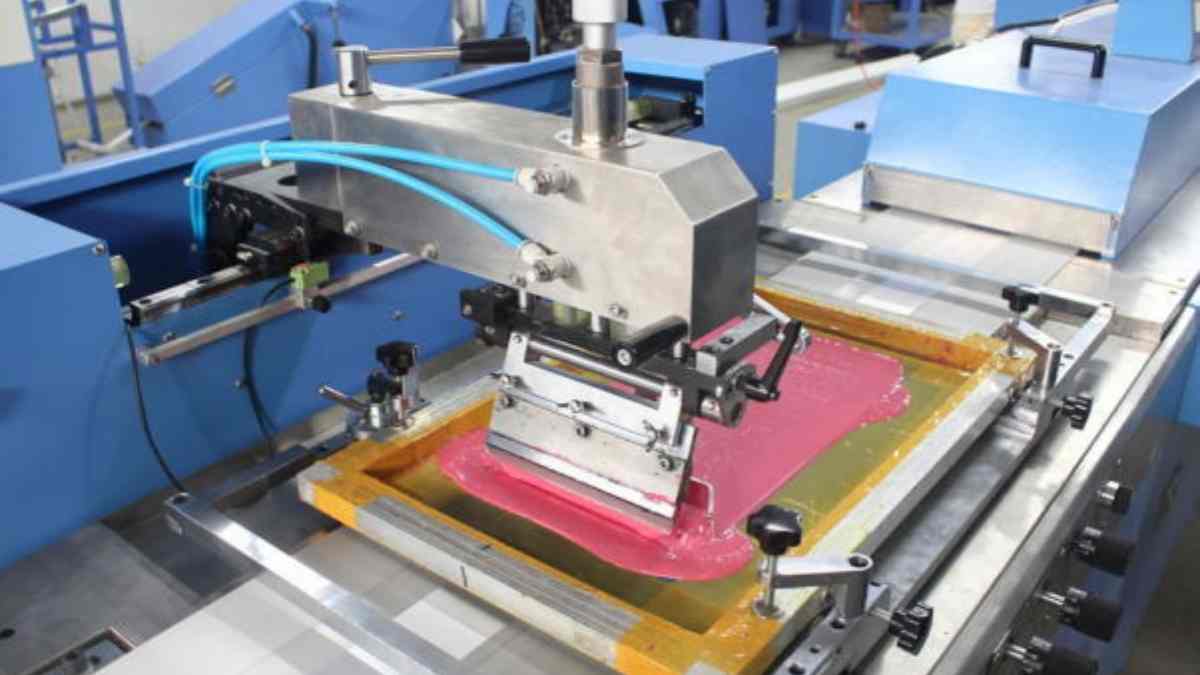
Mastering Silicone Ink for Textile Screen Printing: A Guide to High-Density, 3D and Elastic Applications That Don’t Crack
Switching to a high-quality silicone ink manufacturer changes everything. You get prints that stretch forever and colors that never bleed yet the best part is that it's 100% eco-friendly. Brands like Nike and Adidas won't even look at your samples if they aren't safe and silicone hits all those green targets.
 Bykelseyy

Table of Contents
If you want to keep your high-end clients happy and stop getting complaints about cracked prints, silicone is your answer. I’ve spent years in print shops and I can tell you that switching to a high-quality silicone ink manufacturer changes everything. You get prints that stretch forever and colors that never bleed yet the best part is that it’s 100% eco-friendly. Brands like Nike and Adidas won’t even look at your samples if they aren’t safe and silicone hits all those green targets.
What Is Silicone Ink for Textile Screen Printing?
I like to think of silicone ink as liquid rubber for clothes. Unlike that thick plastisol stuff that feels like a sticker, লিকুইড সিলিকন and screen printing inks are made of high-grade polymers. It’s a two-part system. You have the base ink and you have a catalyst. You mix them together and a chemical reaction happens that makes the ink bond to the fabric forever. It doesn’t just sit on top of the threads but it actually wraps around them. This is why it’s so tough.
Why Garment Manufacturers Use Silicone Ink
The main reason I see people switching is because of the “hand feel.” Big brands want clothes that feel soft against the skin. But it’s also about survival. Rules like OEKO-TEX Standard 100 are getting stricter every year. If your shop is still using old-school inks with PVC or phthalates, you’re going to lose your big contracts. Silicone is clean. It’s safe for babies and it’s safe for the planet. Plus, it can handle a 60°C wash 50 times without even fading.
Fabrics Suitable for Silicone Ink Printing
- Cotton: It looks super premium and stays soft.
- Polyester: This is usually a headache because of dye bleeding but a good blocker fixes that.
- Nylon: Great for windbreakers and bags but you usually need a primer for it to stick.
- Spandex and Lycra: This is the gold mine. silicone ink for lycra and spandex is the only thing that won’t crack when the athlete moves.
- Blended Fabrics: Works like a charm on those 60/40 shirts.
High-Density Silicone Printing for Garments
Everyone wants that sharp, “boxy” look for their logos now. That’s what we call high-density (HD) printing. To do this, I usually use a thick emulsion on the screen. You want the ink to stand up tall like a wall.
Expert Trick: Don’t try to get the height all at once. Print a layer, flash it, and print again. If you try to dump too much ink in one go, the edges will get messy and it won’t cure right in the middle.
3D and Raised Silicone Printing Applications
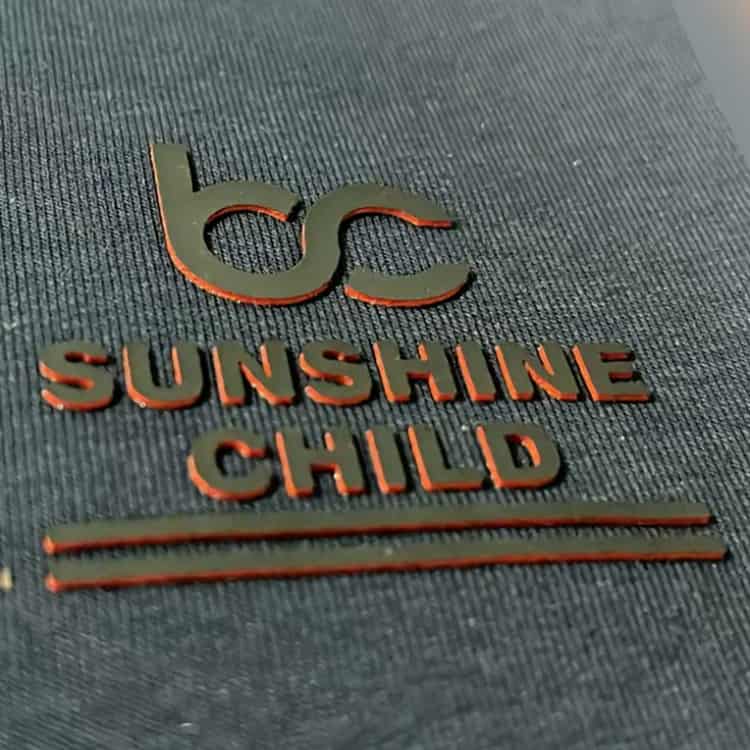
If you want a 3D effect that people want to touch, you need high density silicone ink. It’s perfect for those rubberized patches you see on high-end hoodies. I’ve seen shops use this to replace expensive molded rubber badges. It’s cheaper and you can do it right on your existing screen printing press.
Elastic Silicone Printing for Stretch Fabrics and Sportswear
Here is the thing about elastic silicone ink. It has a “memory.” When you pull a yoga pant, the ink pulls with it but then it snaps back to its original shape. Standard inks are too brittle for this. If you’re doing compression gear or gym wear, this is the only way to go. I’ve seen prints stretched to 300% of their size and they still looked brand new.
Silicone Ink for Sportswear, Activewear and Performance Apparel
Activewear is where silicone really beats every other ink. It’s waterproof but it doesn’t trap sweat against the skin. Also, it’s really light. If you’re making a high-performance running shirt, the last thing you want is a heavy, sweaty print on the chest.
Matte, Glossy, Transparent and Special-Effect Silicone Printing
You can get really creative here.
- Matte: Very popular right now for a “stealth” or luxury look.
- Glossy: Looks like glass. It’s amazing for fashion brands.
- Transparent: I use this for “ghost” prints where you just want to see a subtle shine on the fabric.
- Reflective: You can mix in glass beads to make safety gear or cool night-time streetwear.
Anti-Slip and Functional Silicone Printing on Textiles
I’ve had clients ask for “dots” on the bottom of hospital socks or grip on the inside of a waistband. Silicone is naturally “tacky” so it’s perfect for anti-slip. It stays grippy even when it gets a little wet or sweaty.
Silicone Ink Printing Process: Mixing, Mesh, Printing and Curing
This is where the rubber meets the road.
- মিশ্রণ: Add your pigment (usually 10%) and then the catalyst (2-3%).
- Pot Life: Don’t mix too much! Once you add the catalyst, you usually have about 4 to 6 hours before the ink turns into a brick.
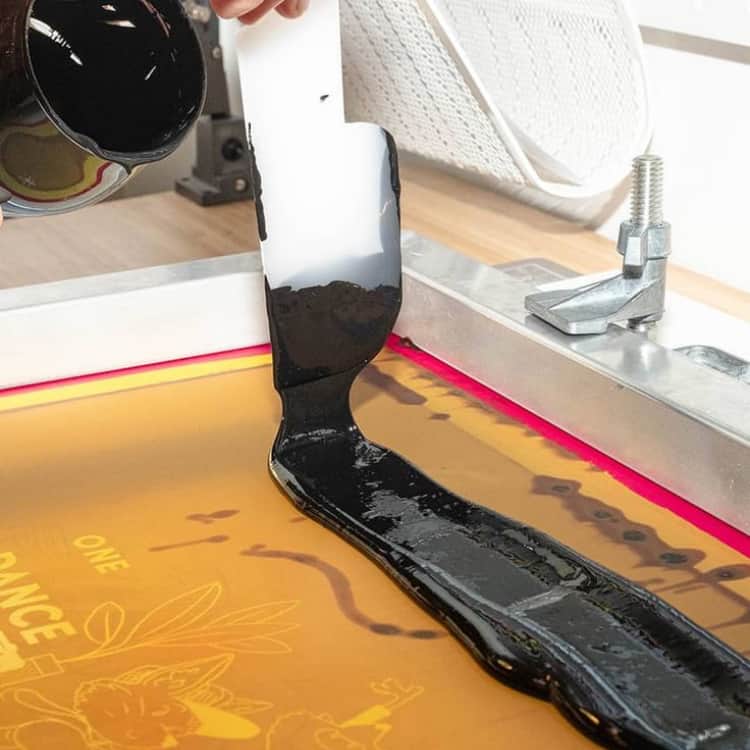
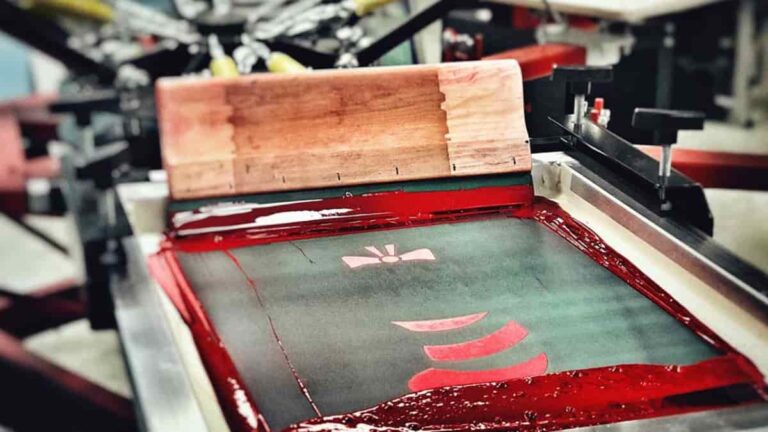
- প্রিন্টিং: Use a firm squeegee and a slow stroke.
- Curing: You must have a dryer. It needs to hit about 150°C for at least a minute or two.
Mesh Count and Screen Selection for Different Print Effects
Selecting the right mesh is a balancing act and I’ve learned this the hard way.
| Print Effect | মেশ কাউন্ট | Why? |
| High Density (3D) | 80 – 100 | You need big holes to let the thick ink through. |
| Fine Text | 120 – 150 | Better for clean edges on small letters. |
| Glossy Top Coat | 100 | Gives a nice, thick layer that levels out smooth. |
| Standard Logos | 120 | The best all-rounder for most jobs. |
Catalyst Ratio, Pot Life and Ink Preparation
If you “eyeball” the catalyst, you’re asking for trouble. If you add too much, the ink will dry in the screen. If you add too little, the shirt will come out of the dryer sticky and it will never dry.
Best Practice: Keep your ink containers closed. Silicone doesn’t like moisture or dust from the factory floor.
Curing Temperature and Time for Textile Silicone Ink
Temperature is everything. I use a laser thermometer to check the shirts as they come out of the belt. You need to reach 150°C-160°C. If your dryer is too fast, the surface will look dry but the bottom of the ink will be wet. This leads to the print peeling off in the first wash.
Adhesion, Stretch and Wash Resistance Requirements
To pass the big brand tests, your print needs to stay stuck. We do a “tape test” where we stick a strong tape on the print and rip it off. If any ink comes with it, it’s a fail. With Sollyd silicone, as long as you cure it right, that ink is there for the life of the shirt.
Preventing Dye Migration on Polyester and Sublimated Fabrics
Polyester is tricky because the dye in the fabric likes to jump into the ink. I call it “bleeding.” To stop this, you need an anti-migration silicone ink. It’s a special gray blocker layer. You print it first, flash it, and then print your white or yellow on top. It works like a shield.
Common Silicone Screen Printing Problems and Troubleshooting
- Bubbles: You’re likely flash-curing too hot. Turn the heat down and move the lamp up.
- Sticky Surface: Your catalyst ratio is wrong or the oven isn’t hot enough.
- Rough Surface: Your mesh is too coarse or your ink is too thick. Try adding a tiny bit of silicone thinner.
Quality Control for High-Volume Garment Printing
When you’re running thousands of pieces, you can’t just hope for the best. I check the first few pieces every hour. I do a quick “stretch test” and a “rub test.” If anything feels off, we stop the line. It’s much cheaper to fix it early than to redo a whole container of shirts.
Silicone Ink vs Plastisol and Water-Based Ink
Plastisol is cheap but it’s bad for the environment and it’s too stiff. Water-based is soft but it doesn’t have the “wow” factor of a 3D silicone print. Silicone is the premium choice. It’s the most expensive but it’s what the world’s best brands are asking for right now.
How Textile Manufacturers Select Silicone Ink Suppliers
Don’t just go for the cheapest price. You need a supplier who actually understands the chemistry. At Sollyd, we help you set up your lines and troubleshoot your tricky fabrics. You want a partner who can provide certificates like ZDHC because your big clients will ask for them.
FAQ: Questions Large Brands and Factories Ask
Q1: Does your silicone ink meet the ZDHC and OEKO-TEX requirements?
A: Yes. We take environmental safety very seriously. Our silicone ink products are free from PVC, phthalates, and lead. We know that for big manufacturers, compliance isn’t optional—it’s a requirement to stay in business.
Q2: Can we use this ink on recycled polyester without it peeling?
A: Recycled fabrics can be oily. We recommend a quick pre-test but generally, our high-adhesion formulas work perfectly on recycled materials. If the fabric has a heavy coating, we have a specific primer that solves the bonding issue.
Q3: How do you handle “white ink turning yellow” on dark polyester?
A: That’s dye migration. You must use our specific anti-migration blocker. It acts as a barrier that prevents the polyester dyes from gaseous migration into the top white layer during and after the heat curing process.
Q4: What happens if the factory temperature is very high?
A: Heat speeds up the catalyst. If your shop is over 35°C, your pot life will be shorter. We suggest mixing smaller batches more often to keep the ink fresh and easy to print.
Q5: Is the ink soft enough for underwear and baby clothes?
A: Absolutely. Once cured, it has a very smooth, skin-friendly finish. It doesn’t cause irritation and it passes all the “skin contact” safety tests required for intimate apparel.

 English
 Deutsch (Sie)
 العربية
 বাংলা
বাংলা 香港中文
香港中文 Français
 Bahasa Indonesia
 Português do Brasil
 한국어
한국어 Tiếng Việt
 日本語
日本語 Polski
 Русский
 Türkçe
 ไทย
ไทย Español de México