-
Call Now +86 13426858645
-
Any Questions info@sollydsiliconeink.com
Choosing Silicone Ink for Textile Printing Applications
Switching to a high-quality silicone ink manufacturer changes everything. You get prints that stretch forever and colors that never bleed yet the best part is that it's 100% eco-friendly. Brands like Nike and Adidas won't even look at your samples if they aren't safe and silicone hits all those green targets.

Table of Contents
Look, half the guys asking about silicone ink think they can just scoop it out of the tub and print high-density yoga pants on a manual press. Newsflash: if you don’t match the ink chemistry to the exact fabric shell, that expensive raised logo is going to peel off like dead skin in the customer’s wash.
Picking silicone ink selection for textile printing is picking your poison. You want an opaque logo on dark polyester or grip on a waistband, you don’t just grab a generic tub. You have to balance adhesion against how much the shirt stretches.
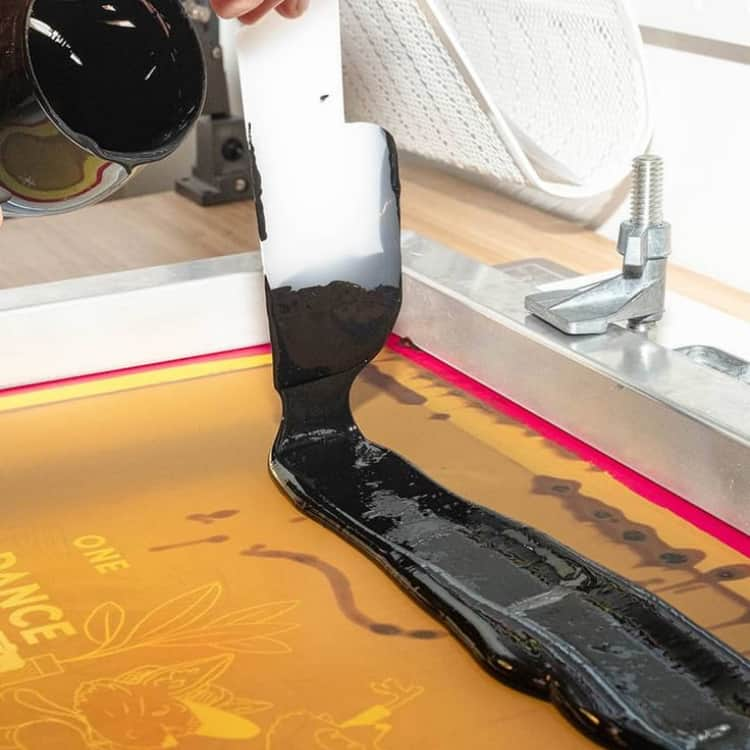
This article cuts the crap and looks at what actually matters on the press when choosing silicone.
Start with the Fabric and the Intended Effect
Forget the reps telling you one ink does it all. Define this garbage first:
- Fabric: Fiber shell, stretch limit, surface treatments, and dye migration risk.
- Effect: Flat, high-density, rounded 3D, matte, glossy, transparent, or anti-slip.
- Garment use: Everyday wear, sportswear, activewear, underwear, or functional gear.
- Performance: Adhesion under tension, stretch recovery, wash survival, opacity, and hand feel.
Evaluate them all together. A poly-spandex blend might need a blocker and a specific flex additive.
The label lies. Test the actual production fabric. If they coated it in cheap sizing, your ink will fail.
Silicone Ink Compatibility with Different Textile Fabrics
Cotton and Cotton Blends
You want bright white on black cotton? You’re smashing it through an 86 or 110 mesh with heavy squeegee pressure. Don’t whine when it feels like a truck tire. Dump reducer in it to make it soft, and watch your opacity turn into a dirty gray ghost.
Select the base and effect layers together.
Polyester
Skip the blocker base and watch your bright white print turning pepto-bismol pink on red poly because the heat pulled the shirt dye right up into the plastic.
Thick opaque white won’t stop it. You need a dedicated chemical barrier layer under the art.
Nylon
Nylon shells are soaked in water-repellent garbage. Print straight on them and it rubs off with your thumb.
Test the specific nylon primer or don’t bother.
Spandex and Stretch Blends
A flexible top layer doesn’t mean a damn thing if the base layer cracks when the customer bends their knee. Every layer in the stack has to stretch.
Choosing Silicone Ink for Different Garment Effects
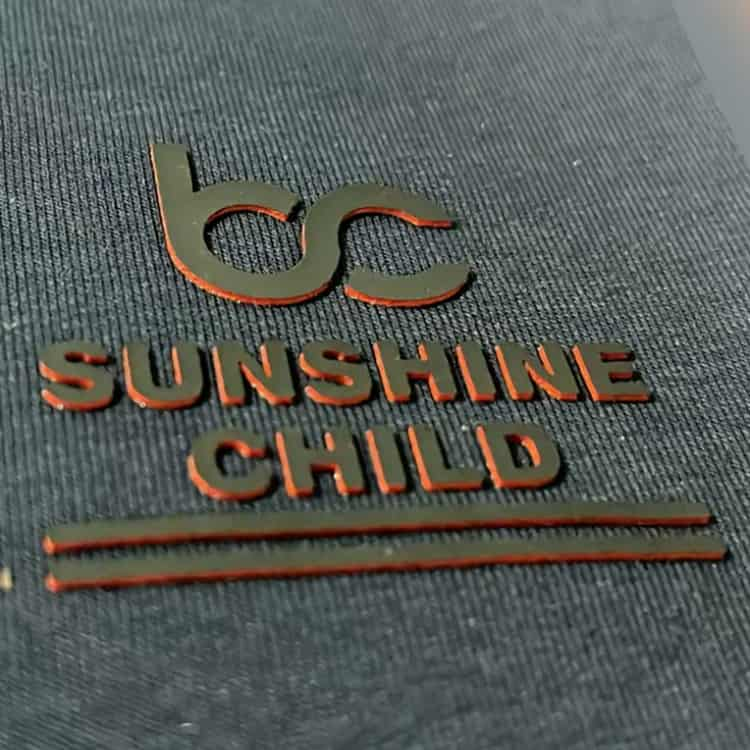
High-Density and Structured Raised Effects
For silicone ink for high density printing, get ready to work. It sits in the tub stiff as cold peanut butter right out of the bucket; you have to churn it with a spat until your forearms ache.
Shoving thick ink through a thick stencil doesn’t automatically give you a sharp raised wall. High-density silicone ink is for structured logos. Match the cure to the shirt, or you end up with bulletproof chest armor that feels like a floor mat.
Rounded 3D and Soft Raised Effects
Formulations built to hold a sharp vertical edge won’t naturally settle into a smooth dome. Pick the exact profile you want before mixing. Request a sample that matches the shape.
Elastic Effects for Stretch Fabrics
When selecting silicone ink for stretch fabrics, you are testing adhesion under extreme extension.
Elastic silicone ink is for leggings and compression gear. Keep large areas in check—a massive rubber shield ruins the garment’s natural stretch.
Matte, Glossy, and Transparent Effects
Pick your poison:
| Finish | Typical application | Material properties to prioritize |
| Matte | Understated logos | Dead low sheen, surface durability |
| Glossy | Wet-look accents | Leveling, gloss consistency |
| Transparent | Clear textures | Clarity, controlled surface finish |
| Opaque color | Contrasting logos | Coverage vs. heavy hand trade-off |
Gloss and clear aren’t the same. Specify if you want wet-look gloss or a dead matte clear.
Match the Ink to the Garment Application
Sportswear and Activewear
Friction, sweat, and movement. Treat migration risk separately from stretch. A high-stretch poly panel will still turn your white ink pink without a blocker.
Underwear and Close-Fitting Garments
Needs to be soft where it touches skin. Firm 3D edges here are a joke.
Fashion Garments and Casualwear
Placement dictates the thickness. A heavy chest crest handles completely differently than a thin left-chest hit.
Anti-Slip and Functional Textile Printing
Decorative gloss is not grip. Don’t slap clear ink on a waistband and expect it to hold.
Buy the actual functional anti-slip formula and test the friction until the fabric rips. Spec the required result, don’t just grab a bucket that says “silicone.”
The Material Properties Behind a Good Selection
| Property | Why it matters | Main selection tradeoff |
| Cured hardness | Structure and hand feel | Firmer feels like garbage on thin shirts |
| Rheology | Flow under squeegee | Shape retention vs. smooth leveling |
| Elasticity and recovery | Movement | Every layer has to survive the stretch |
| Opacity | Covering darks | High coverage turns into bulletproof chest armor |
| Adhesion | Sticking to the shell | Depends entirely on the fabric coating |
| Surface finish | Gloss or matte | Appearance vs. actual functional grip |
Labels like “soft” are useless without testing on your actual run.
Fabric–Effect–Recommended Ink Type Reference
| Fabric or garment | Desired effect | Ink system to evaluate | Main validation point |
| Cotton T-shirt | Flat logo | Soft textile silicone | Hand feel |
| Cotton hoodie | Raised logo | High-density system | Edge definition |
| Poly sportswear | Light elastic logo | Elastic system + blocker | Migration, recovery |
| Sublimated poly | Opaque branding | Blocker layer construction | Delayed dye bleeding |
| Nylon windbreaker | Flexible decoration | Nylon primer | Adhesion |
| Spandex leggings | Stretch logo | High-elasticity system | Recovery |
| Underwear blend | Low-profile | Soft flex system | Contact comfort |
| Fashion garment | Glossy detail | Clear system | Leveling |
| Socks | Grip pattern | Anti-slip formulation | Friction under tension |
Silicone, Plastisol, or Water-Based Ink?
Compare what actually works on the press.
| Selection factor | Silicone ink | Plastisol ink | Water-based ink |
| Typical strengths | Elastic, 3D, functional grip | Opaque graphics | Soft finishes |
| Stretch applications | Extreme stretch | Needs stretch additive | Depends on binder |
| Raised effects | Structured 3D | High-density available | System dependent |
| Hand feel | Varies by hardness | Varies by deposit | Can be soft |
| Polyester migration | Needs chemical barrier | Needs low-bleed blocker | Fabric specific |
| Selection priority | Match chemistry to shell | Match deposit to substrate | Match binder to needs |
Environmental claims are usually marketing crap. Get the actual certificates.
Production Details to Confirm After Material Selection
Printing Process
Get your base, blocker, and colors right before running 500 pieces. See the technical printing guide for reality.
Mesh Count
Don’t use the same mesh for high-density as a flat logo. Thread diameter and stencil thickness matter just as much as the count. Read the mesh and screen guidance.
Catalyst Ratio
Mix it exactly to the spec sheet. Guess the ratio and it won’t cure. Consult the mixing guidance.
Pot Life
Plastisol never dries on the mesh—leave it over the weekend, eat lunch, it doesn’t care. But don’t touch it with water. You need press wash, mineral spirits, or degreaser, and your rags belong in an OSHA-rated fire can.
Silicone is a different reality entirely. It dies in the pot. Once you drop the catalyst in, the clock is ticking. You go to lunch and leave it on the screen, you’re buying a new screen. Read the ink preparation and working-time guidance.
Curing Process
230°F flash is just tacky surface gel so the next head doesn’t smear. If the core of that deposit doesn’t see a verified 320°F through the tunnel, it peels off like dead skin in the customer’s wash. Laser temp guns are liars—donut probes tell the truth. Put the probe straight into the wet ink. You’re baking that vinyl paste to 320°F so it fuses into a solid chunk of rubber. Follow the curing guidance.
Troubleshooting
Peeling isn’t always bad catalyst, and bleeding isn’t always the ink. Diagnose it properly based on your layer stack. Use the troubleshooting guidance.
Supplier Selection
Ask for the data sheets. Ignore the marketing brochures. See the supplier evaluation guide.
FAQ: Questions Large Brands and Factories Ask
Q1: Does your silicone ink meet the ZDHC and OEKO-TEX requirements?
A: Yes. We take environmental safety very seriously. Our silicone ink products are free from PVC, phthalates, and lead. We know that for big manufacturers, compliance isn’t optional—it’s a requirement to stay in business.
Q2: Can we use this ink on recycled polyester without it peeling?
A: Recycled fabrics can be oily. We recommend a quick pre-test but generally, our high-adhesion formulas work perfectly on recycled materials. If the fabric has a heavy coating, we have a specific primer that solves the bonding issue.
Q3: How do you handle “white ink turning yellow” on dark polyester?
A: That’s dye migration. You must use our specific anti-migration blocker. It acts as a barrier that prevents the polyester dyes from gaseous migration into the top white layer during and after the heat curing process.
Q4: What happens if the factory temperature is very high?
A: Heat speeds up the catalyst. If your shop is over 35°C, your pot life will be shorter. We suggest mixing smaller batches more often to keep the ink fresh and easy to print.
Q5: Is the ink soft enough for underwear and baby clothes?
A: Absolutely. Once cured, it has a very smooth, skin-friendly finish. It doesn’t cause irritation and it passes all the “skin contact” safety tests required for intimate apparel.

 English
 Deutsch (Sie)
 العربية
 বাংলা
 香港中文
 Français
 Bahasa Indonesia
 Português do Brasil
 한국어
 Tiếng Việt
 日本語
 Polski
 Русский
 Türkçe
 ไทย
 Español de México