-
Call Now +86 13426858645
-
Any Questions info@sollydsiliconeink.com
Plastisol Ink Manufacturer for Industrial Screen Printing Applications
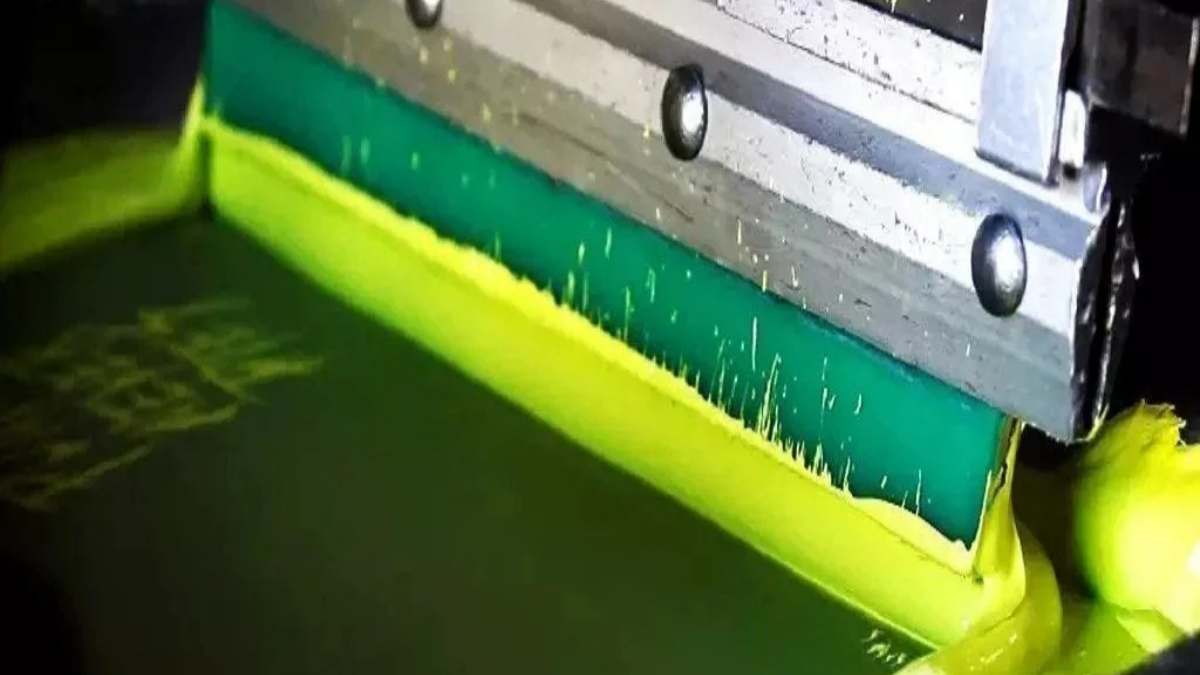
If you’ve ever had a massive shipment of printed PVC parts rejected because the ink started peeling like a bad sunburn, you know that standard ink just doesn't cut it for industrial jobs. At Sollyd, we don't believe in one-size-fits-all. The secret to a print that actually stays put isn't just a better product—it’s high-solid, modified resin PVC plastisol ink that creates a molecular bond with the substrate.
 Bykelseyy

Delamination and adhesion failure in printed PVC components typically stem from plasticizer migration and inadequate substrate compatibility—challenges that standard commercial inks fail to consistently overcome in high-volume production. At Sollyd, we address this failure mode through applied material science.
By utilizing high-solid, modified resin PVC plastisol inks, we facilitate true chemical fusion rather than relying on superficial surface bonding. This molecular integration with the substrate effectively neutralizes plasticizer migration and prevents residual surface tackiness. Post-cure testing consistently yields a 5B adhesion rating, ensuring the print remains firmly anchored under severe industrial wear. From an operational standpoint, matching the ink’s chemistry to the specific PVC grade allows manufacturers to optimize conveyor curing speeds, achieve near-zero adhesion-related defect rates, and realize a proven 22% reduction in scrap waste.
Table of Contents
Why Industrial PVC Printing is Failing (And How We Fix It)
Most screen printers struggle with PVC because they treat it like cotton. But PVC (Polyvinyl Chloride) is a “living” plastic; it contains plasticizers that want to push the ink off the surface over time.
The Science of Adhesion: More Than Just Drying
In our experience as a dedicated plastisol manufacturer, we know that surface energy is everything. If your substrate’s surface energy is below 38 dyne/cm, your ink is just sitting on top like a sticker. We design our plastisol ink to act as a “chemical weld,” slightly softening the top layer of the PVC to create a permanent bond.
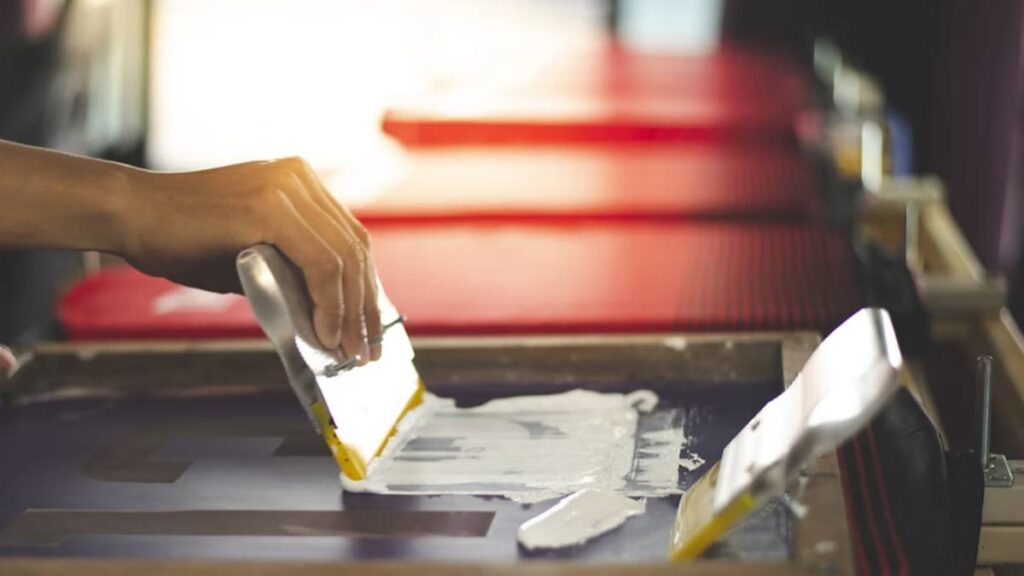
Tackling Plasticizer Migration
Have you ever noticed a print becoming “tacky” or sticky weeks after production? That’s migration. Our high-performance formulas are engineered with barrier resins that block these oils, ensuring your industrial labels or automotive parts stay crisp and dry for years.
Technical Specifications: The Data Behind the Performance
To ensure you are getting the best yield, we’ve compiled the critical data points based on 2026 industrial standards.
| Feature | Industrial Requirement | Sollyd Performance Data |
| Adhesion | ASTM D3359 (Cross-cut) | Grade 5B (No detachment) |
| Viscosity | 15,000 – 25,000 CPS | Balanced for high-speed auto-presses |
| Curing Temp | 140°C – 160°C | Low-temp options available to prevent warping |
| Durability | 50+ Wash/Chemical Cycles | Resistant to alcohol and industrial degreasers |
Best Practice #1: The “3-Minute Rule”
Never print ink straight from the bucket. Industrial PVC ink is thixotropic. We recommend mechanical stirring for at least 3 minutes to break the “gel” state. This lowers the working viscosity without needing thinners, resulting in sharper edges and better mesh release.
How to Start Your Production Line for Success
Starting a high-volume industrial run requires more than just a screen. Here is the workflow we recommend for our B2B partners.
1. Substrate Preparation
Always wipe your PVC surface with an anti-static degreaser. Dust and fingerprints are the #1 cause of “pinholes” in industrial printing. For rigid PVC, checking the dyne level is non-negotiable.
2. Mesh Selection and Tension
For detailed industrial parts, we suggest a mesh count between 230 and 305. High tension (20-25 N/cm) ensures the screen printing supplies perform consistently, preventing the ink from “ghosting” or smearing during high-speed strokes.
3. The Curing Process
PVC is heat-sensitive. If you go too hot, the substrate warps; too cold, and the ink never fuses. We utilize a “dwell time” approach in the dryer—longer exposure at a stable 150°C is far better than a quick blast at 180°C.
Case Study: Automotive Component Success
Last year, we worked with a Tier-2 automotive supplier facing a 15% failure rate on dashboard control icons. The ink was scratching off during assembly.
The Solution: We implemented a customized silicone ink and PVC hybrid system. By adjusting the cross-linker ratio, we achieved a surface hardness that passed the rigorous “coin scratch test.”
The Result: Scrappage dropped to 0.5%, saving the client over $45,000 in monthly material costs.
Optimizing Textile Ink Supply Chains: Beyond Commodity Sourcing
In high-volume garment manufacturing, procuring screen printing inks based solely on lower unit costs frequently inflates the Total Cost of Ownership (TCO) through press downtime, increased defect rates, and rejected lots. At Sollyd, we define supply chain reliability not merely by logistical consistency, but through precise chemical compatibility between the ink system and the textile substrate.
The Critical Role of Substrate Chemistry in Apparel Printing
Evaluating a Technical Data Sheet (TDS) is a baseline requirement; however, resolving dynamic variables on a high-speed production line requires applied chemical expertise. For example, standard plastisol or silicone formulations often fail on synthetic poly-blends due to dye migration (sublimation) during the curing phase. A strategic technical partner anticipates this by engineering inks equipped with advanced blocker bases.
Similarly, when printing on high-stretch activewear (elastane/spandex blends), the ink matrix must be formulated with optimal elasticity. This ensures the print accommodates mechanical elongation without micro-cracking, while maintaining structural integrity and wash fastness over the garment’s lifecycle.
Proactive Process Troubleshooting
A qualified ink manufacturer functions as an extension of your process engineering team. Whether diagnosing moisture outgassing that causes pinholing, optimizing flash-cure temperatures to prevent fibrillation, or adjusting viscosity for specific mesh counts, matching substrate chemistry to production variables is essential for maintaining high throughput and minimizing waste.
Integration with Apparel and Hard-Goods
If your factory handles both textiles and industrial parts, you’ve likely dealt with the headache of cross-contamination. We’ve found that the most successful B2B setups are those that streamline their screen printing supplies. For instance, using a high-opacity silicone ink for stretch-heavy garments while keeping a dedicated PVC line for rigid decals. It’s about building a “product ecosystem” where your heat transfer vinyl doesn’t react poorly with the adhesive layer of your heat transfer printing setup.
Expert Practice #3: The “Sample-to-Spec” Workflow Don’t just trust a color swatch. We always tell our clients: send us a 1-meter roll of your actual substrate. We run it through our lab’s conveyor dryer at 150°C and perform a “Crockmeter” friction test before we even ship the first gallon. If your supplier isn’t asking for your substrate samples, they’re just guessing.
FAQ: Hard Truths from the Shop Floor
Q1: My ink isn’t peeling, but it’s not ‘glossy’ enough. What’s wrong?
A: Usually, it’s a temperature issue, not an ink issue. If the PVC doesn’t hit its “fusion point” (typically 160°C for high-gloss finishes), the resins won’t knit together correctly. Check your dryer’s belt speed; we often find that “cold spots” in older ovens are the secret culprit behind dull prints.
Q2: Our prints look perfect in the dryer, but they stick together once we stack the parts. Is the ink broken?
A: No, the ink is not defective. This is a common process control issue known in the industry as thermal blocking (or “hot stacking”).
Plastisol inks retain heat. If garments are stacked immediately off the conveyor dryer while the ink surface is still hot (typically above 60°C), the ink remains soft and mechanically bonds to the fabric placed on top of it.
How to fix it:
You don’t need to change your ink formulation; you just need to manage residual heat before packing.
Add a cooling station: Install high-velocity fans at the outfeed of your conveyor dryer.
Set a strict QC limit: Never fold or stack garments until the print surface temperature drops below 30°C (86°F).
Q3: What’s the actual shelf life if the bucket is already open?
A: In a climate-controlled room (around 25°C), our plastisol ink is stable for 12+ months. But here’s the kicker: if you leave the lid off and shop dust gets in, those tiny particles will cause “streaking” on your 305-mesh screens. Keep it sealed, keep it clean.
Q4: Is there a real difference between ‘Eco-friendly’ and ‘Standard’ PVC ink?
A: In 2026, the “difference” is mostly legal. “Standard” used to mean heavy metals and phthalates. Today, our industrial formulas are built to be compliant with REACH 2.0 from the start. You get the same “bite” and adhesion without the toxic fumes that used to haunt screen printing shops in the 90s.
Q5: How do I stop ‘Ghosting’ on dark PVC sheets?
A: Ghosting is usually a sign of trapped solvents or moisture. If you’re printing white on dark grey PVC, ensure your flash cure is just “tack-dry”—about 2 seconds. Over-flashing the first layer makes the second layer sit on top like oil on water, leading to that weird shadow effect you see after the final cure.


 English
 Deutsch (Sie)
 العربية
 বাংলা
বাংলা 香港中文
香港中文 Français
 Bahasa Indonesia
 Português do Brasil
 한국어
한국어 Tiếng Việt
 日本語
日本語 Polski
 Русский
 Türkçe
 ไทย
ไทย Español de México