-
쇼핑 카트 +86 13426858645
-
카트 서랍 닫기 [email protected]
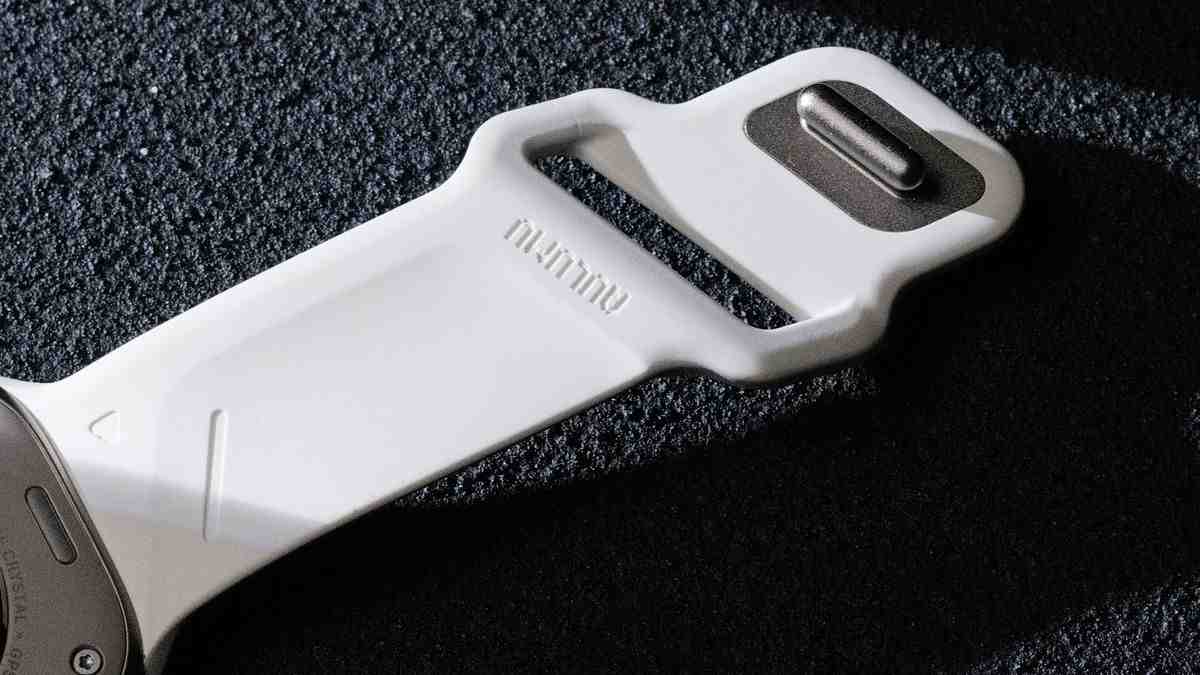
Permanent Adhesion on Silicone: The Manufacturer’s Guide to Skin-Safe Ink for Wearable Devices
silicone has extremely low surface energy, standard inks only sit on top rather than bonding. If you skip cross-linking chemistry, peeling is guaranteed. That is where we come in. As a silicone ink manufacturer, we help you avoid those "scraped-off" disasters by ensuring your print becomes a permanent part of the device.
 작성자:kelseyy

Table of Contents
Scratch testing a freshly unboxed silicone strap with a fingernail shouldn’t peel the brand logo clean off—but that exact issue triggered a full-batch return on a $200 smartwatch lineup. The design looked great on paper, but the shop used standard screen ink instead of a proper platinum-cure silicone formulation.
Because silicone has extremely low surface energy, standard inks only sit on top rather than bonding. If you skip cross-linking chemistry, peeling is guaranteed. That is where we come in. As a silicone ink manufacturer, we help you avoid those “scraped-off” disasters by ensuring your print becomes a permanent part of the device.
What Is Silicone Ink for Wearable Device Manufacturing?
Let’s keep it simple. Most inks are like a layer of dried glue sitting on top of a surface. But silicone ink is different. It is basically “liquid skin.” It’s made of the same stuff as your smartwatch band or medical sensor.
When we talk about silicone ink at Sollyd, we’re talking about a specialized material that uses a catalyst to trigger a chemical bond. You print it, you heat it, and it literally fuses with the substrate. This is vital because silicone rubber is “low surface energy”—it’s naturally slippery. Nothing wants to stick to it. By using 액상 실리콘 and screen printing inks, you’re essentially “welding” the color into the rubber.
Wearable Components That Require Silicone Printing
You see silicone in almost every piece of tech that touches your body today. It’s soft, it doesn’t cause rashes, and it lasts forever. Here’s where my clients usually need our help:
- Smartwatch bands: From fitness tracking icons to brand logos.
- Medical wearables: Think of glucose monitors or heart rate patches that need clear, sharp instructional text.
- Sensor housings: Soft covers for electronics that move with the user.
- Silicone buttons: The “Home” or “Volume” buttons on rugged devices.
- Flexible interfaces: Printed circuits on elastic bands that must stretch without breaking.
If you’re making these, you’re likely looking for a screen printing silicone ink manufacturer who understands that “close enough” isn’t good enough for a premium product.
Silicone Ink Applications in Consumer, Medical and Industrial Wearables
I’ve worked with everyone from startup toy makers to massive medical firms. In the consumer world, the goal is “hand-feel.” Nobody wants a scratchy, plastic-feeling logo on their wrist. They want it to feel like silk.
In the medical world, it’s about safety. The print needs to handle daily alcohol and disinfectant wipe-downs without lifting. For smart helmets or high-vis gear, it has to hold up through full 12-hour shifts in heat and rain. The market is already pivoting to these heavy-duty specs—buyers simply won’t accept prints that rub off after light wear.
Substrate Compatibility: LSR, HCR and Molded Silicone Rubber
This is a big one. Clients often ask me, “Will this work on my specific band?”
Well, it depends.
LSR (Liquid Silicone Rubber) is very common in high-end tech because it’s injection-molded and very precise. But it can be oily.
HCR (High Consistency Rubber) is tougher and often used for extruded parts.
당사의 wearable silicone materials are formulated to work on both, but you have to adjust your “cooking” (curing) time. HCR might need a slightly longer bake to make sure the cross-linking is complete.
Adhesion Challenges When Printing on Silicone Wearable Components
Here is the “elephant in the room”: Silicone hates glue. It hates ink. It’s designed to be non-stick.
The biggest challenge is “migration.” Silicone contains oils that like to travel to the surface. If you print over those oils, the ink will peel off within a week. Another issue is the “mold release” chemicals used in factories. If those aren’t cleaned off properly, your print is doomed from the start.
Surface Preparation and Pretreatment Before Silicone Printing
Don’t skip this. If you do, you’re just wasting money. I always tell my factory partners to follow these three steps:
- Degrease: Wipe the parts with high-purity IPA (Isopropyl Alcohol).
- Activate: Use a flame or, even better, a Plasma Treatment. This “shocks” the surface of the silicone, making it “hungry” for the ink.
- 확인: Use a Dyne test pen to see if the surface tension is high enough. If the liquid beads up, don’t start the press yet!
Best Practice: If you’re printing on a high-speed line, integrate an in-line plasma station. It’s an investment, but it drops your defect rate to nearly zero.
Printing Logos, Symbols, Scales and Functional Markings on Wearables
When you print a tiny “heart rate” icon, it has to be sharp. If the ink bleeds even a fraction of a millimeter, it looks cheap. Silicone ink is thick (high viscosity), which is actually great for this. It stays put. For textile-based wearables, like smart shirts, we use silicone ink for garment printing because it can handle the gaps in the fabric without losing the shape of the logo.
Flexibility, Stretchability and Repeated-Bending Resistance
A smartwatch strap isn’t a flat piece of paper. It’s constantly being pulled. If your ink can’t stretch, it will crack. It’s that simple.
We test our high-stretch silicone ink by stretching it over and over. A good ink should be able to stretch 2 to 3 times its length and snap back without a single wrinkle. We follow the ASTM D412 standards to ensure that the physical properties of the ink match the rubber it’s printed on. You can read more about these stress-strain standards at ASTM International.
Abrasion, Sweat, Skin Oil and Chemical Resistance Requirements
Your skin is actually quite “corrosive.” Sweat is salty, and skin oils (sebum) can act like a slow-moving solvent. Add some sunscreen or perfume into the mix, and most inks just dissolve.
I’ve seen logos literally melt off after a user spent a day at the beach. That’s why we test for “chemical soak.” We put the printed parts in jars of synthetic sweat and oils for days. If the ink stays tough, it passes.
Color Matching, Opacity and Surface Finish for Wearable Products
If your brand’s color is a specific “Sunset Orange,” it needs to look exactly like that Sunset Orange on every device. But silicone is often translucent. If you print orange on a black strap, it might look like a dirty brown.
To fix this, we use high-opacity pigments. We put more “punch” into the color so it covers the dark background. We can also give you a matte finish that feels like a “soft touch” coating, which is very popular in the luxury tech market right now.
Curing Conditions and Process Control for Mass Production
You can’t air-dry these inks. They need a “kick” from heat.
I usually recommend a conveyor oven. You want the part to reach about 120°C to 150°C.
Pro-tip: Don’t trust the dial on your oven. Use a “thermal lizard” (a temperature probe that travels through the oven) to see what is actually happening at the surface of the part. If the temperature drops by even 10 degrees, your ink might not fully cure, leading to those peeling issues I mentioned earlier.
Adhesion and Durability Testing for Wearable Components
Don’t just take my word for it. Test it yourself.
- The Tape Test: Use 3M 600-series tape. Stick it on hard, rip it off fast. The ink should stay.
- The Rub Test: We use a “Crockmeter” to rub the ink 5,000 times with a dry and wet cloth.
- The “Twist” Test: Grab the strap and twist it like a wet towel. No cracks? Good.
| Testing Goal | Industry Standard | Success Criteria |
| 접착력 | ASTM D3359 | 5B Rating (No detachment) |
| Skin Safety | ISO 10993 | Non-irritant / Non-sensitizer |
| Stretch | Internal SOP | >200% Elongation |
Biocompatibility and Skin-Contact Considerations
If your device gives a customer a rash, you’re in big trouble—especially in the medical field. Our silicone inks are formulated to be “inert.” This means they don’t react with the skin.
We ensure our materials are compliant with ISO 10993-5 (In vitro cytotoxicity) and ISO 10993-10 (Irritation and skin sensitization). You can find these safety guidelines on the ISO official site. It’s not just about being “eco-friendly”—it’s about being human-safe.
Common Printing Defects and Troubleshooting
Even with the best ink, things go wrong. Here’s what I usually see on the shop floor:
- Fish-eyes: Little holes in the ink. Usually caused by silicone spray in the air. Keep your printing room separate from your molding room!
- Slow Drying: If the ink is still tacky, your catalyst ratio is off. Use a digital scale, not a measuring spoon.
- Edge Blur: Your screen is probably too loose. Tighten your mesh tension.
How Manufacturers Select Silicone Ink for Wearable Devices
If you are a manufacturer, don’t just shop for the lowest price per kilo. Think about the “total cost of quality.” One rejected shipment of 10,000 units will cost you way more than a premium bucket of ink.
Look for a partner who can provide:
- SGS/RoHS Certifications.
- Custom color matching.
- On-site technical help (or at least a very responsive video call).
At Sollyd, we’ve built our reputation on being that partner. We know the wearable industry moves fast, and we make sure your printing process doesn’t slow you down.
자주 묻는 질문(FAQ)
1. My customers wear their watches in the pool. Will chlorine damage the print?
Not if you cure it properly. Actually, silicone is naturally tough against water and those harsh pool chemicals. We make sure our inks go through “swim tests” in chlorinated water—it’s the only way to be certain the colors won’t fade or start peeling off mid-lap.
2. We are moving to “eco-friendly” manufacturing. Is your ink green?
Yes. You know that heavy chemical smell—like a gas station—that comes with traditional solvent inks? We hate it too. Our silicone inks are totally solvent-free. Since they don’t dump nasty fumes (VOCs) into the air, your factory stays much safer for the team, and you’ll find it’s way easier to hit those strict environmental targets.
3. Can I print on top of a “Soft Touch” coating?
That’s a bit of a tricky one. In most cases, you’re better off printing directly onto the raw silicone and doing the coating afterward. Or, honestly, just use a matte silicone ink to get that “soft-touch” feel from the start. If you try to print over an existing coating, the ink usually just sticks to that top layer—not the strap itself—and that’s a recipe for peeling.
4. How do I stop the ink from getting “thick” in the screen?
Basically, silicone ink has a “pot life”—once that catalyst hits the mix, the clock is officially ticking. You’ll want to keep your workspace cool (aim for 22-25°C) and only mix enough for a 4-to-6-hour shift. If things start getting a bit too thick on the screen, we’ve got specialized thinners that can loosen it up without messing with how well it sticks.
5. We need to print on very dark, black silicone. Will the colors be bright?
Yes, but you might need two passes or a white under-base. However, our high-opacity series is designed to cover black in a single print, saving you time and keeping the logo thin and flexible.

 English
 Deutsch (Sie)
 العربية
 বাংলা
বাংলা 香港中文
香港中文 Français
 Bahasa Indonesia
 Português do Brasil
 한국어
한국어 Tiếng Việt
 日本語
日本語 Polski
 Русский
 Türkçe
 ไทย
ไทย Español de México