-
Ligue Agora +86 13426858645
-
Alguma Pergunta [email protected]
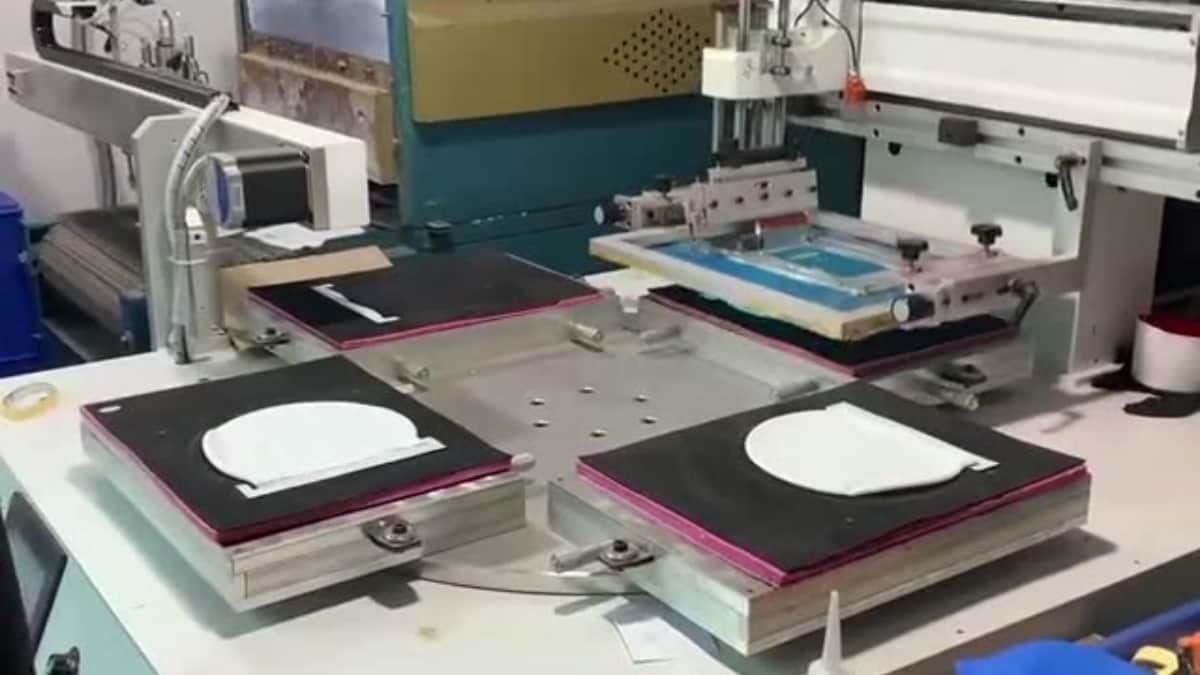
Chega de descascar: Tinta de silicone de alta elasticidade e resistente ao cloro para fabricantes de toucas de natação
Se você quer um logotipo que realmente sobreviva a um estiramento massivo sem quebrar, você precisa de uma ligação química real. É exatamente por isso que existem produtos de tinta de silicone especializados. Eles não ficam apenas em cima da touca; eles basicamente se fundem a ela, tornando-se parte do próprio silicone.
 Porkelseyy

Table of Contents
A massive pile of rejected swim caps sits on your factory floor, and every single one has a logo that is peeling off like a piece of dead skin. It is a total nightmare for any production manager. You lose money, you waste time, and you definitely lose the trust of your biggest clients. A lot of folks in the printing shop still try to use standard inks on silicone, but honestly, that’s like trying to get water to stick to glass. It’s just not going to happen. If you want a logo that actually survives a massive stretch without snapping, you’ve got to have a real chemical bond. This is exactly why specialized silicone ink products exist. They don’t just sit on top of the cap; they basically melt into it, becoming part of the silicone itself.
Why Silicone Swim Caps Require Specialized Printing Ink
Silicone is a bit of a weird material. It’s built to be non-stick, which is fantastic for a kitchen spatula but a total pain for anyone in screen printing. Since silicone has such low surface energy, it basically kicks away almost any solvent or water-based ink you try to apply. The truth is, the only thing that’s going to grab onto silicone is silicone itself.
When we’re over here at the lab developing silicone líquido e screen printing inks, our main focus is that “cross-linking” reaction during the bake. While a regular ink just dries out and leaves a weak film behind, specialized silicone ink goes through a chemical change. It builds a permanent bridge between the ink and the product. Without this specific chemistry, your logo is basically a temporary tattoo waiting to fall off.
Silicone Ink Requirements for Swim Cap Manufacturing
Factory owners often ask me why they can’t just use any silicone ink. Here is the reality: swim cap manufacturing is a high-speed game. You need an ink that stays wet on the screen so your workers don’t have to stop every ten minutes to clean the mesh, but it has to cure lightning-fast once it hits the dryer.
We’ve refined our silicone ink for garment printing to have a long “pot life.” This means you can mix a batch in the morning and keep printing until the end of the shift. It avoids the thick, gummy mess that usually ruins screens in a hot factory environment.
Printing on Highly Stretchable Silicone Rubber Surfaces
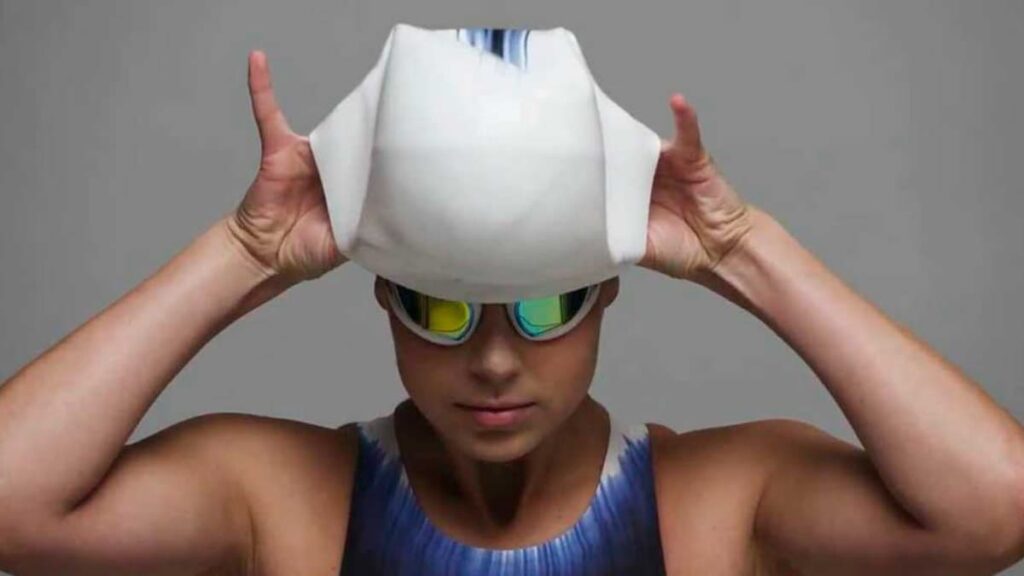
Think about a swimmer yanking that cap on. It can stretch out to three or four times its normal size in seconds. Most other materials would just snap long before hitting that point. Silicone elastomers, these materials are built for extreme elongation.
Your ink must be just as athletic as the swimmer. If the ink is too rigid, the logo will “shatter” into a million tiny cracks the first time it’s used. At Sollyd, we test our ink’s elongation daily. We make sure the ink “breathes” and snaps back into place along with the silicone rubber.
Screen Printing Logos, Graphics and Multicolor Designs on Swim Caps
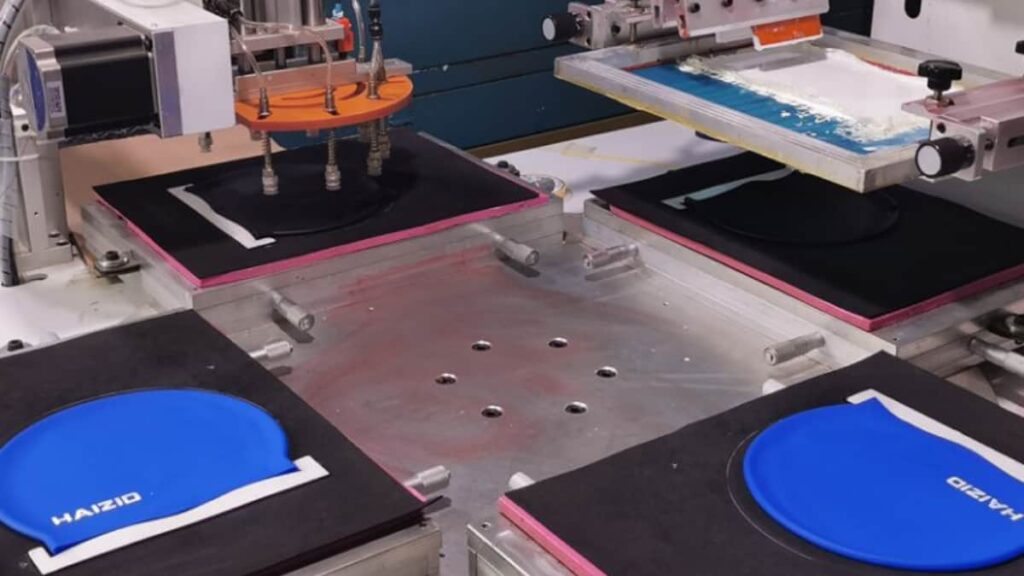
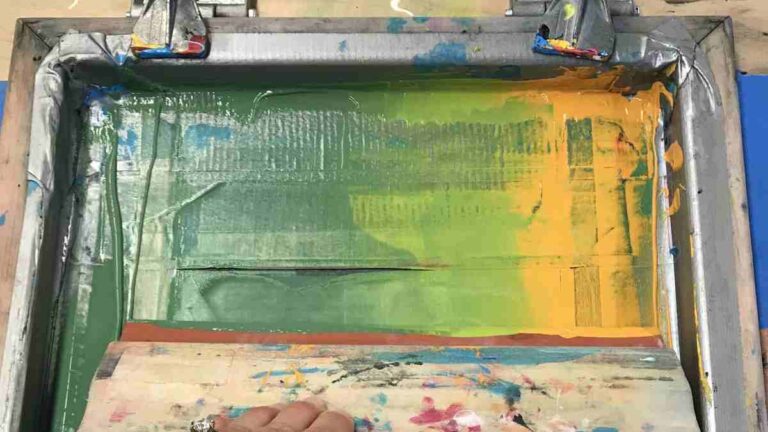
Printing a single color is one thing, but multi-color graphics require precision. Since you are printing on a flexible, curved surface, color registration is tough. You have to “flash” the ink—apply a quick hit of heat—to set the first color before the second one goes down.
Pro Tip: Use a slightly higher mesh count for your top colors. This keeps the ink layers thin. If the total ink deposit gets too thick, it starts to feel heavy and might affect how the cap fits the swimmer’s head.
Surface Preparation Before Swim Cap Printing
You can buy the most expensive ink in the world, but it won’t work if the cap is dirty. During molding, factories use “mold release” sprays (often silicone oils) to get the caps out of the metal plates. That oil is an ink-killer.
Always wipe the printing area with a clean cloth. Some factories use a quick flame treatment or an alcohol wipe. Whatever you choose, make sure the surface is “clean and dry.” It’s the simplest step, but skipping it is the #1 reason for adhesion failure.
How to Improve Silicone Ink Adhesion on Swim Caps
If you are struggling with peeling, look at your catalyst. As an lsr silicone manufacturer, we know that the ratio of ink to hardener is everything. You’ve got to get your ratios right—if you skimp on the catalyst, the ink stays soft and tacky. But if you get heavy-handed and add too much, the print gets brittle and just pops right off.
Also, check your dryer. You need the heat to really get in there, past the ink and down to the cap’s surface, to kickstart that bonding process. Just drying the top layer isn’t enough; you need that deep, solid cure.
Stretch, Flex and Crack Resistance Requirements
We put our tinta de silicone products through what we call the “stress test.” We like to print a solid color block, pull it until it can’t go any further, and let it fly back. If you see even a tiny bit of white “snowing” or a jagged edge, we know the formula isn’t ready for the market.
Let’s be real: a swimmer is going to use that same cap all season. That’s hundreds of stretches. Our ink is engineered to handle “flex fatigue.” We make sure those polymer chains don’t just snap apart after the thousandth time someone pulls it over their head.
Chlorine, Water, Sweat and Chemical Resistance
Think of pool water as a harsh chemical soup. Between the chlorine, the salt, and the acidity of human sweat, most inks just melt away or fade. Chlorine is particularly aggressive; it oxidizes pigments and makes standard plastics turn yellow or crack like an old eggshell (Source: ResearchGate – Stability of Silicone in Chlorinated Environments).
Sollyd uses inorganic pigments that don’t react with chlorine. This keeps the colors bright even if the cap spends 4 hours a day in a public pool.
Color Opacity and Printing on Dark Silicone
Printing white on a black cap used to be a nightmare. You’d end up with a gray, muddy-looking logo. To solve this, we increased the “loading” of titanium dioxide in our white silicone color pigments.
You get a crisp, bright white in just one or two passes. This saves you money on ink and reduces the time each cap spends under the screen. High opacity is the difference between a “cheap” looking cap and a professional, high-end product.
Curing Silicone Ink Without Damaging the Swim Cap
Sure, silicone is tough against heat, but those thin edges on a swim cap will warp or wave if you get too aggressive with the dryer. It’s all about finding that sweet spot. We usually suggest staying around 120°C (248°F). I’ve seen shops try to “turbo-charge” their production by cranking the heat to 180°C. Honestly? Don’t do it. You’ll end up scorched caps and ruined inventory.
Printing Parameters for Consistent Mass Production
When you are doing 10,000 caps a day, you need a system.
- Malha: 100 to 120 T for bold logos.
- Squeegee: A 70-durometer blade works best—not too hard, not too soft.
- Mistura: Use a digital scale. If you are “eyeballing” your mix is a recipe for a bad batch.
Stretch, Adhesion and Chlorine-Resistance Testing
I always tell our clients to run a “wash test” and a “stretch test” before the caps leave the building.
- Tape Test: Slap some industrial-strength tape on that logo and give it a hard yank.
- Soak Test: Toss the cap in a heavy chlorine mix for 24 hours.
If the logo looks the same after these tests, you are good to ship.
Common Swim Cap Printing Problems and Solutions
- Problem: Small holes in the ink (pinholes).
- Cause: Dust on the cap or air bubbles in the ink. A simple fix is to let your mixed ink breathe for about 10 minutes before you start your run.
- Problem: The ink is falling off after a week.
- Cause: Under-cured ink or mold release residue. Increase your oven time or improve your cleaning process.
Selecting Silicone Ink for OEM Swim Cap Production
Picking a supplier isn’t just about finding the cheapest price per kilo. It’s about technical support. When a big brand asks you for a safety certificate, you need to have it ready. Sollyd provides full documentation for OEKO-TEX and REACH, so you can bid on those big international contracts with confidence. We focus on being more than just a lsr silicone manufacturer; we are your technical partner on the production floor.
FAQ for Quality Managers
1. How do you handle the environmental impact of your ink?
Our silicone ink is actually 100% eco-friendly. We don’t put any PVC, phthalates, or nasty solvents in there. Plus, when it’s curing in your shop, you won’t deal with those toxic fumes. For brands that are pushing “green” manufacturing, this is a massive selling point.
2. Can we use this ink on both latex and silicone caps?
No. This ink is chemically designed for silicone. It will not bond to latex. For latex, you would need a different solvent-based rubber ink. We always recommend sticking to one material per production line to avoid confusion.
3. What happens if the ink is too thick for fine details?
If you need to hit those super fine lines, you can use a bit of specialized silicone thinner to lower the viscosity. It lets the ink flow through high mesh counts—even up to 180T. Just keep it under 10%, or your colors might start to look a little see-through.
4. Is the ink safe for competitive swimmers with sensitive skin?
Yes. Once that ink is fully cured, it’s completely inert. It won’t leach out chemicals or irritate anyone’s skin. That’s why we use it for pro gear that athletes wear for hours at a time.
5. How do we keep the colors from fading in outdoor “open water” swimming?
We use UV-stable pigments because, let’s face it, sunlight is just as brutal as chlorine. We test our pigments to make sure they can handle long-term sun exposure. Whether it’s a bright red or a deep blue, those colors stay punchy even in the middle of the ocean.

 English
 Deutsch (Sie)
 العربية
 বাংলা
বাংলা 香港中文
香港中文 Français
 Bahasa Indonesia
 Português do Brasil
 한국어
한국어 Tiếng Việt
 日本語
日本語 Polski
 Русский
 Türkçe
 ไทย
ไทย Español de México