-
Call Now +86 13426858645
-
Any Questions info@sollydsiliconeink.com
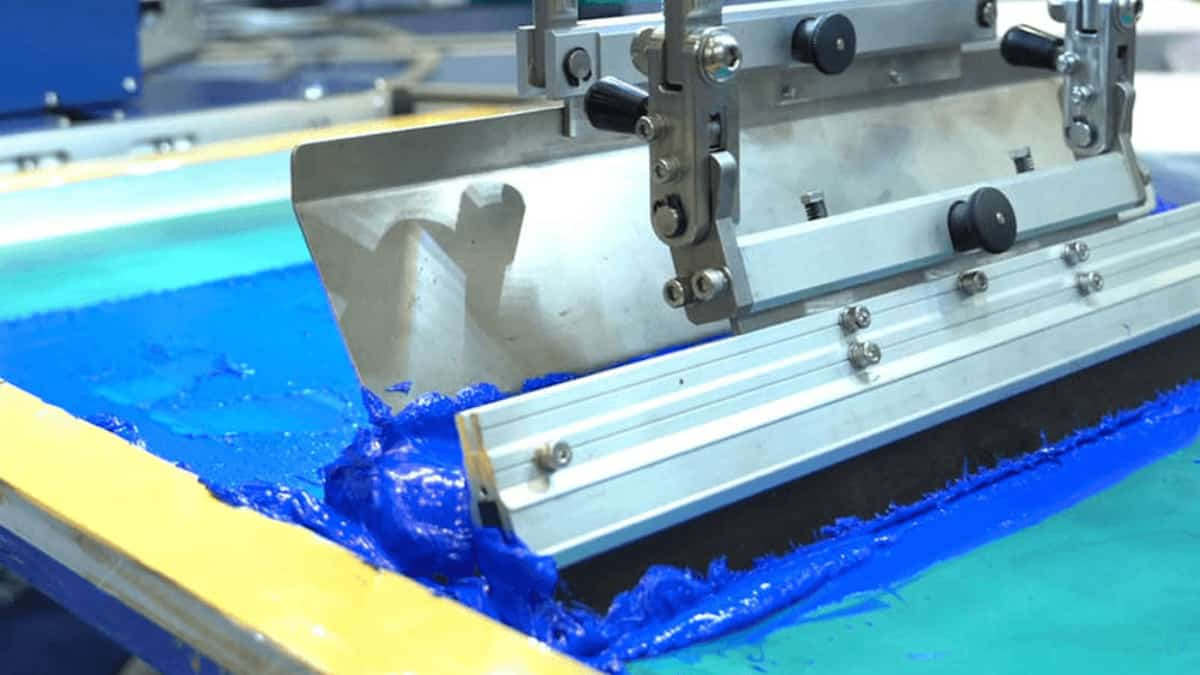
Silicone Ink for Screen Printing: A Buyer’s Guide
This ink fixes the most annoying problems in the factory like dye migration on polyester and the stiff "plastic" feel of old-school prints. Your customers will love it because it’s eco-friendly and lasts through 50+ industrial washes.

Table of Contents
Look, half the guys buying ink think they can just scoop it out of the tub and print high-density yoga pants on a manual press. Newsflash: if you don’t match the chemistry to the exact fabric shell, that expensive print is going to peel off like dead skin in the customer’s wash. Silicone ink for screen printing is your only real shot at flexible logos and raised rubber hits on synthetics, but only if you stop treating it like standard plastisol.
Approving a shiny sample in a boardroom is amateur hour. On the floor, you need exact catalyst ratios, a real curing window, and a supplier that doesn’t ship you a bad batch that dies on the screen.
This is the reality of buying silicone ink. Skip the marketing brochures. Here is what actually matters on the press.
What Is Silicone Ink for Screen Printing?
It’s a two-part chemical nightmare that turns into a flexible chunk of rubber on a shirt. You get a thick base, you drop in a catalyst, and the clock starts ticking.
Don’t buy industrial liquid silicone and think you can shove it through a mesh. Textile grades are built for garments, meaning they have the body to hold an edge and the stretch to survive a knee bend.
When you’re dealing with a silicone ink manufacturer, make them prove it. Ask for the exact grade, the catalyst ratio, and the spec sheets. Generic “silicone” claims are garbage.
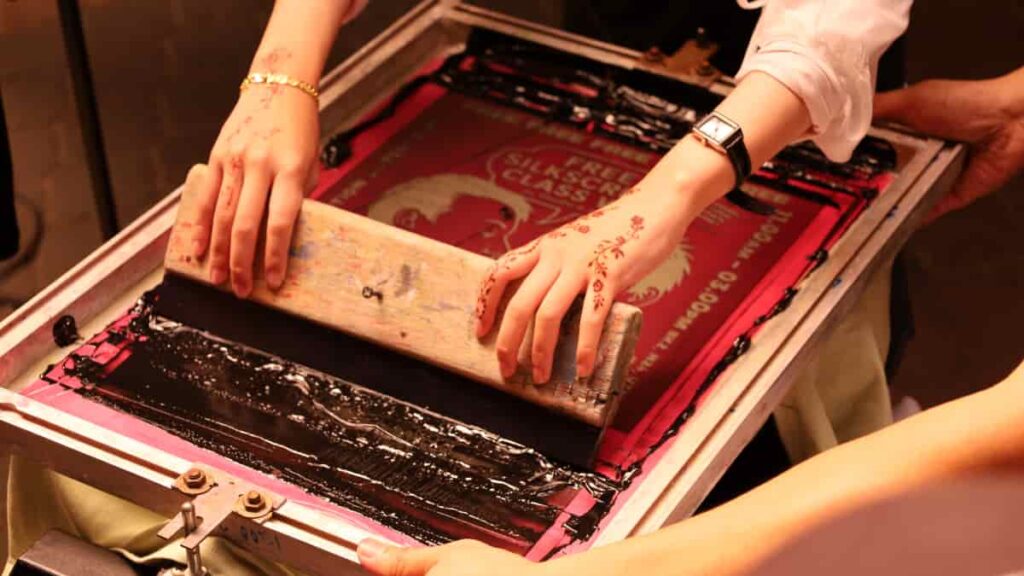
Which Materials Can Be Screen Printed with Silicone Ink?
The tag on the shirt lies. Fabric composition doesn’t mean a damn thing if the mill soaked the shell in cheap sizing or water-repellent garbage.
- Lycra and spandex blends: A flexible top layer means nothing if the base layer cracks when the customer bends their knee. Every layer has to survive the tension.
- Polyester: Skip the blocker base and watch your bright white print turning pepto-bismol pink on red poly because the heat pulled the shirt dye right up into the plastic. You need a dedicated silicone dye blocker.
- Nylon: Nylon shells laugh at standard ink. Print straight on them and it rubs off with your thumb. Test the specific nylon primer or walk away.
- Cotton: You want bright white on black cotton? You’re smashing it through an 86 or 110 mesh with heavy squeegee pressure. Don’t whine when it feels like a floor mat.
Send the supplier the actual production fabric. Wash test it.
Industrial Applications of Silicone Screen Printing Ink
Define what the hell the shirt actually does before you buy the ink.
| Application | Typical purchasing priority |
| Leggings, sports bras, and fitted tops | Surviving spandex stretch without cracking |
| T-shirts and hoodies | Not feeling like bulletproof chest armor |
| Footwear textiles | Beating up shoe uppers without peeling |
| Socks and waistband grip patterns | Friction until the fabric rips. Use actual anti-slip. |
| Reflective decorative graphics | Actual measured reflection, not just shiny gray sludge |
Decorative gloss is not grip. A soft print isn’t legally cleared for medical use.
Types of Silicone Ink Used in Screen Printing
Pick your poison.
| Product type | Main purpose | What buyers should confirm |
| Elastic silicone ink | Surviving spandex stretch | Base adhesion, recovery, and layer compatibility |
| High-density silicone ink | Stiff 3D walls | It sits in the tub stiff as cold peanut butter right out of the bucket; check cured stiffness |
| Matte system | Dead low-sheen decoration | Finish consistency and surface durability |
| Glossy system | Wet-look decoration | Leveling and layer compatibility |
| Anti-migration blocker | Stopping dye bleed on poly | Actual chemical barrier performance, not just thick gray sludge |
| Transparent silicone ink | Clear hits | Clarity and actual adhesion |
| Anti-slip formulation | Functional grip patterns | Friction under relevant use conditions |
| Silicone transfer-printing system | Making transfers | Carrier release and pressing temps |
Silicone heat transfers are entirely different beasts from vinyl. Don’t mix them up.
Read Choosing Silicone Ink for Textile Printing Applications before you ruin a 500-piece run.
Silicone Ink Screen Printing Process: A Brief Overview
Here is the reality. You mix exact weights, drop your blocker, hit your colors, flash it, and bake it.
High-density means you are running endless print-flash cycles until your forearms ache. Flat logos are faster.
Before you buy, map out every single station on the press. More layers mean more time, more screens, and more money down the drain.
For the actual mechanical details, read the 3D Silicone Ink Printing Process Guide.
Mesh Count, Squeegee and Printing Parameters
Don’t guess. Make the supplier give you the starting points.
| Parameter | Information the supplier should provide |
| Mesh | Exact threads per inch. Thick thread diameter changes everything. |
| Stencil | Emulsion thickness. |
| Squeegee | Durometer and edge profile. |
| Printing sequence | The exact stack of base, blocker, and colors. |
| Equipment | Manual vs Auto settings. |
| Intermediate heating | Real flash temps and limitations. |
Slapping high-density ink through a 230 mesh is a joke. Test their specs on your own screens.
Mixing Ratio, Catalyst and Pot Life
Silicone is a different beast. Plastisol never dries on the mesh—leave it over the weekend, eat lunch, it doesn’t care. But don’t touch it with water. You need press wash, mineral spirits, or degreaser, and your rags belong in an OSHA-rated fire can.
Silicone dies in the pot. Once you drop that catalyst in, you’re on borrowed time.
Make them tell you:
- Exact mixing ratio by weight. Use a scale.
- What the ratio actually applies to.
- The right catalyst.
- How much pigment you can dump in before it stops curing.
- The real pot life.
- Storage requirements and unopened shelf life.
- Handling instructions after opening.
If the belt stops or your catcher goes to the bathroom and that pot life expires, your screen is dead. You’re buying a new screen. For wholesale silicone ink buys, match your bucket sizes to what you can actually print in a shift.
Silicone Ink Curing Temperature and Time
Everybody lies about their dryer temps. A 230°F flash is just tacky surface gel so the next head doesn’t smear. That’s it.
If the core of that deposit doesn’t see a verified 320°F (160°C) through the tunnel, you’re just baking a crust over raw slime. It peels off like dead skin in the customer’s wash.
Make them tell you the exact cure temp and dwell time. Laser temp guns are liars—donut probes tell the truth. Put the probe straight into the wet ink. You’re baking that vinyl paste to 320°F so it fuses into a solid chunk of rubber. Validate it before you ship boxes.
How to Select Silicone Ink for Production Requirements
Start with the fabric shell.
Got spandex? Look at an elastic silicone ink. Need grip? Buy grip. Dark poly? You need a chemical blocker.
Before you call a rep for silicone ink for garment manufacturers, have this ready:
- The actual fabric shell.
- Artwork size.
- Opacity targets.
- Stretch limits.
- Wash testing specs.
- What your dryer can actually hit.
- Trial quantity and expected production volume.
A great top white ink won’t save you if you cheap out on the blocker base.
Common Screen Printing Defects: A Buyer’s Checklist
Use sample evaluation to catch this garbage before placing a production order. Check for:
- Bubbles, pinholes, or air you whipped into the mix.
- Peeling from the fabric because you skipped the primer.
- Separation between layers from over-flashing.
- Cracking under required stretch.
- Tackiness because you screwed up the catalyst ratio on the scale.
- Dye migration or delayed discoloration.
- Changes after washing or rubbing.
Don’t dump random silicone oil into the bucket to thin it out without asking. For peeling issues, read the Silicone Ink Adhesion Guide.
What Manufacturers Should Ask a Silicone Ink Supplier
A suitable textile silicone ink supplier should actually know how to run a press.
Samples and Trial Orders
Get the base, catalyst, blocker, and colors. Test it on your floor, on your press, with your squeegees. Save the approved strike-off in a dark drawer.
MOQ and Packaging
Don’t assume they’ll sell you a quart of custom Pantone just because they sell stock white by the quart.
| Purchasing detail | What to confirm |
| MOQ | Minimum per product and per color |
| Trial orders | Availability and pricing |
| Packaging | Net weight, container type, and component pack sizes |
| Labeling | Product identity, batch reference, and storage information |
| Shelf life | Remaining usable life expected at delivery |
| Mixed orders | Whether different items can share an order minimum |
Buying a 50-gallon drum of catalyst is stupid if you only print silicone once a month. Match the packaging to your actual burn rate.
Lead Time and Delivery
When does the clock start? Do they stock it or mix it to order? Build in time for your own floor testing.
Custom Colors
Send a Pantone. Make them match it. Remember, smashing ink through an 86 mesh makes it look darker than a thin 230 hit. Check the color on the actual garment.
TDS, SDS and COA
| Document | Purpose |
| TDS — Technical Data Sheet | How to mix, print, and bake it without ruining a run. |
| SDS — Safety Data Sheet | How not to burn down the shop. Keep your rags in an OSHA-rated fire can. |
| COA — Certificate of Analysis | Proof the batch isn’t garbage. |
If the brand wants compliance testing, get the real certificates.
Batch Consistency
If the next bucket is soup and the last one was peanut butter, you’re screwed. Ask how they track batches.
How to Choose a Silicone Ink Supplier
Compare suppliers using the same fabric, artwork, and acceptance criteria. An evaluation should answer five questions:
- Technical fit: Does the ink actually stick to the shell?
- Reproducibility: Can your catcher replicate the sample without a PhD?
- Documentation: Are the spec sheets real or marketing crap?
- Supply reliability: Do they ship buckets that fit your schedule?
- Support: Can you get someone on the phone who actually knows how to run an auto press?
Price per bucket is a rookie metric. Calculate the blocker, the catalyst, the lost ink dead on the screen, the extra flash units, and the misprints. That is your real cost.
FAQ
Is your silicone ink eco-friendly and child-safe?
Yes. All Sollyd silicone inks are PVC- and phthalate-free, certified by OEKO-TEX and ZDHC to ensure they’re safe for babywear and sensitive skin. This is the biggest reason factories switch to us.
How do I stop the ink from drying on the screen?
Silicone ink is actually great because it doesn’t dry in the screen like water-based ink. It only cures with high heat. You can leave it on the mesh for hours and it will still be wet yet you should still clean up at the end of the day with proper screen wash.
Why does my white ink turn yellow or pink after curing?
This is dye migration. The heat from your oven is turning the fabric dye into a gas and it’s moving into the ink. You must use a silicone dye blocker to seal the fabric before you print your colors.
Can I use a regular heat press to cure silicone?
You can use a heat press for transfers but for bulk screen printing a conveyor dryer is much better. A heat press can sometimes “squash” the 3D effect of the ink and it is much slower for production.
What is the shelf life of the ink?
Stored in a cool, dry place with lids sealed tight, our silicone inks have a 12-month shelf life.

 English
 Deutsch (Sie)
 العربية
 বাংলা
 香港中文
 Français
 Bahasa Indonesia
 Português do Brasil
 한국어
 Tiếng Việt
 日本語
 Polski
 Русский
 Türkçe
 ไทย
 Español de México